What to check before choosing a Niagara Falls night tour
A night visit changes the feel of Niagara Falls. The water is still the main event, but the pace, the light and the viewing points can make the evening feel very different from a daytime visit. Before choosing a niagara falls night tour, look past the headline and check the details that affect what you will actually see and do.
The most useful checks are practical ones: when the lights run, where the group gathers, how long the evening lasts and whether the route suits your preferred pace. A little attention to those points can prevent a rushed arrival, a poor viewing spot or a tour that ends before the best part of the night.
Check the lighting schedule first
Illumination is often the reason people choose an evening visit, so confirm how it fits the tour. A lighting schedule can vary with the season, local events and operating conditions. If the lights begin after sunset, find out whether the tour reaches the falls before that moment or only after it. The difference matters, especially if the route includes several stops.
It is also worth checking which side of the falls is used for viewing. The lit cascades look different from different angles. Some routes favour the pedestrian promenade, while others include overlooks or a boat cruise earlier in the day. If photography is a priority, ask whether there is time to stay still for a few minutes rather than moving on as soon as the group is called back.
Look closely at the route and viewing time
Not all evening routes are built around the same experience. One may focus on table rock and nearby viewpoints. Another may include Clifton Hill, the observation deck or a wider walk through the tourist area. The right choice depends on whether the main goal is the falls themselves, the surrounding nightlife or a mix of both.
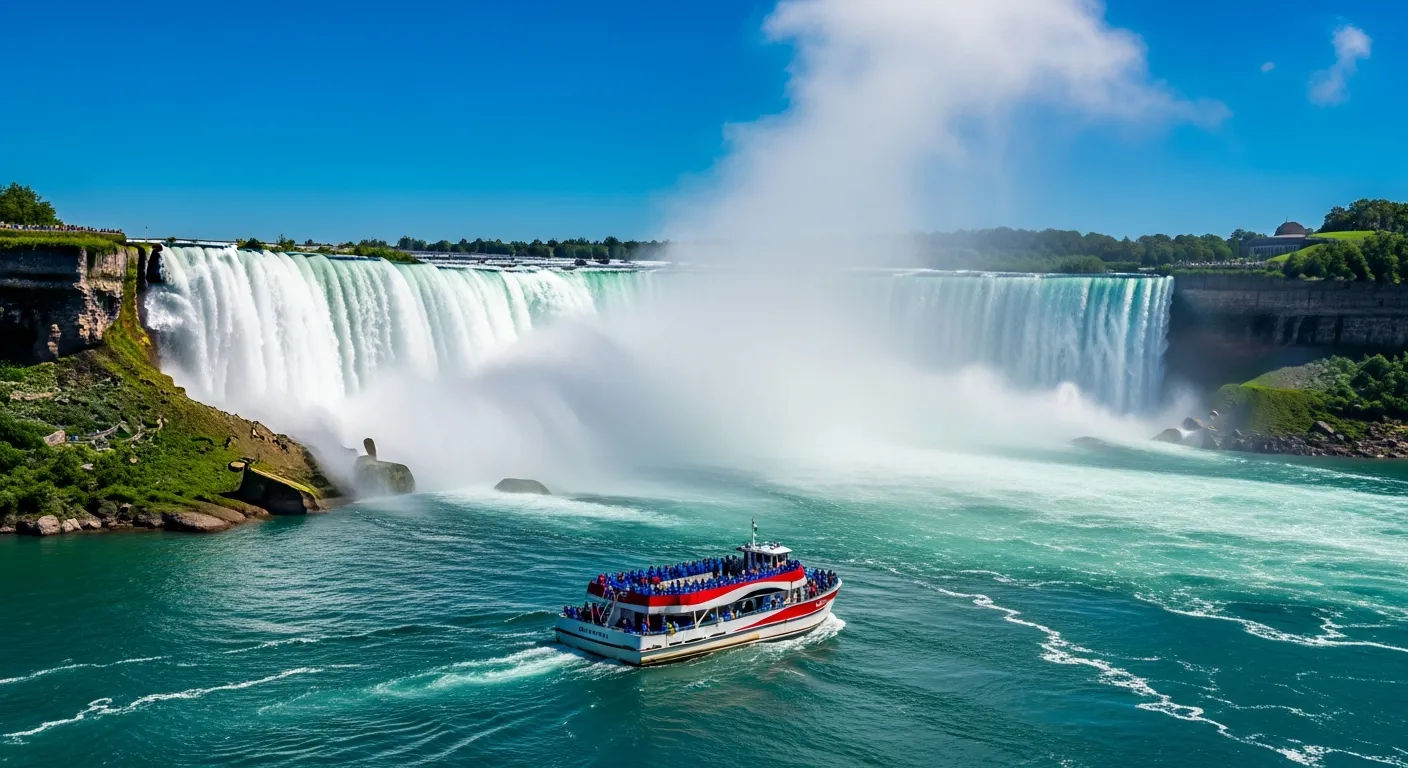
Viewing time is easy to overlook. A route can sound complete on paper yet leave little time at the most dramatic points. Check how long the stop at the falls lasts and whether the group moves as one. Smaller groups often make it easier to find a clear position near the rail, but that is not the only factor. Timing, crowd levels and the exact meeting point all shape the experience.
When comparing options on niagarafallstour.co, pay attention to the sequence of stops as well as the list of attractions. A stop listed at the end of the evening may feel very different from the same stop near the beginning, particularly when the lighting schedule and sunset time are considered.
Confirm the meeting point and arrival plan
Even a well-planned evening can feel stressful if the start point is hard to find. Check the exact meeting place, what it is called on local maps and whether it sits near a major road, parking area or hotel zone. A landmark can be helpful, but a precise address or intersection is clearer. Arrive with enough time to handle traffic, security lines and the short walk that often comes with popular viewing areas.
Also check what happens if you are late. Some tours follow a fixed timetable because later stops depend on access, lighting or transport schedules. Knowing the rule before the evening starts helps you plan dinner, parking and any earlier activities. If the tour starts near a busy attraction, allow extra time rather than cutting it close.
Ask what is included and what is not
Inclusions can change the value of an evening out, but they should be read with care. Some tours centre on guided commentary and viewing time. Others may bundle extras such as a boat cruise, meals, attraction entries or transportation. Each addition can be useful, yet it can also reduce the time spent at the falls if the schedule becomes crowded.
- Guided commentary: Useful if you want context about the falls, the nearby viewpoints and the area around them.
- Boat cruise: Check whether it takes place before dark, since visibility changes after sunset.
- Observation deck: Confirm whether access is included and whether it fits the route without a long wait.
- Transportation: Look at pickup and drop-off points, especially if you are staying outside the main tourist district.
Exclusions matter too. A tour may not include food, attraction tickets or time for a full meal. If the evening is part of a larger trip, plan around those gaps. The aim is not to collect the most extras, but to choose a route that matches how you want to experience the night.
Check seasonal hours and weather conditions
Seasonal hours affect more than opening times. They can change sunset, crowd patterns, lighting times and how busy the promenade feels after dark. In colder months, exposed walkways can feel much colder once the sun is down. In warmer months, popular viewpoints may be crowded well into the evening.
Weather deserves a practical check too. Mist from the falls can dampen clothing near some viewpoints, and rain can make paved areas slick. A light waterproof layer is often more useful than a heavy coat that takes up space. Footwear with a steady grip is sensible, especially if the route includes ramps, steps or wet pavement.

If conditions look poor, find out whether the tour still runs and which parts may change. A route that relies heavily on outdoor stops will feel different in heavy rain. A flexible plan with an indoor stop may be more comfortable, though it may offer less time beside the falls. This is a trade-off worth weighing before you commit.
Think about photography before you go
Night photography at the falls calls for patience. Long exposures can make the water look smooth, while faster settings capture more of its force. Either approach works, but each needs a steady hand or a small tripod. Check whether tripods are practical on the route and whether crowded railings leave enough room to set one up.
Phone cameras can produce good results if the lens is clean and the shot is stable. Keep the camera still, avoid heavy digital zoom and take a few frames from different positions. If illumination is central to your plans, arrive at the viewpoint before the lights come on. That gives you time to frame the scene instead of joining a rush at the rail.
Also think about battery life. Cold air and long exposure settings can drain a phone faster than expected. A compact power bank and a clear memory card can save the evening. These are small details, but they matter when the best view appears after a long wait.
Match the tour to the people going
A route that suits one visitor may not suit another. Families may prefer clear meeting points, shorter walks and early start times. Couples may want more time at the illuminated falls and less time in busy entertainment areas. Visitors with limited mobility should check distances, steps, surfaces and resting places before selecting a route.
Group size can also shape the night. Larger groups are easier to spot in a crowd but may move more slowly at viewpoints. Smaller groups can feel more direct, though they still need clear instructions about where to meet. Ask whether the group stays together at every stop or whether there is some free time. That answer can make a big difference if you like to linger.
Review the cancellation and timing rules
Before booking, read the terms that cover changes, late arrivals and cancellations. This is not the exciting part of planning, yet it is one of the most useful checks. Weather, transport delays and other trip plans can shift quickly. Clear rules make it easier to decide what to do if the evening does not go as expected.

Check the end time as carefully as the start time. A late finish can affect dinner reservations, hotel check-in plans or the next day's schedule. If the tour ends in a different area from where it began, work out how you will get back. A short walk can feel much longer at night, especially after a full day of sightseeing.
Make the final choice with the evening in mind
The best choice is usually the one that fits your priorities, not the one with the longest list of stops. If illumination is the highlight, protect the time at the viewpoint. If you want a broader night out, look for a route that includes the promenade, nearby attractions and enough structure to keep the evening simple.
Read the lighting schedule, confirm the meeting point, check seasonal hours and look at the route in detail. Those checks cover the details most likely to affect the night. Once they line up, the tour is easier to enjoy, whether you are watching the water, taking photographs or simply taking in the falls after dark.